Panchebaja: the sound of a Nepali wedding, on film
What the panchebaja is, the instruments in it, and why we film the band as carefully as the couple.
Sunrise Photo Studio · · 2 min read
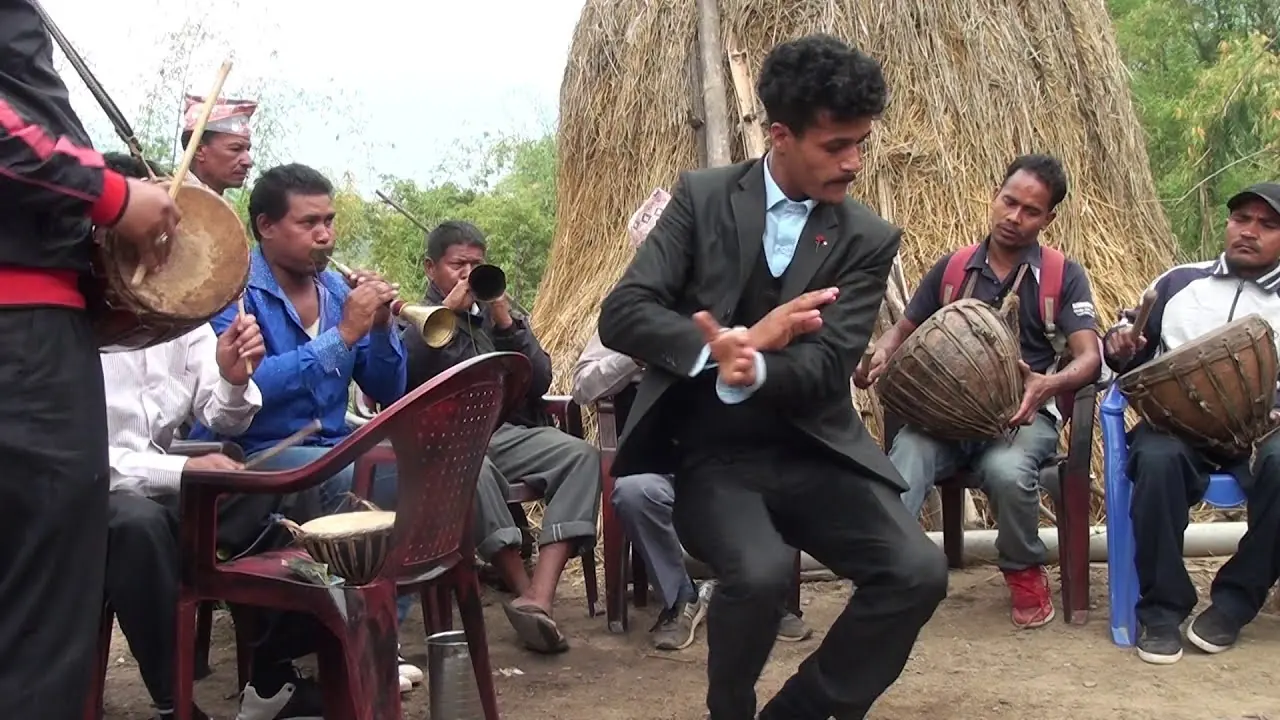
If there's one sound that tells a whole village a wedding is on, it's the panchebaja. The band leads the janti, plays through the rituals and sends the bride off at the bidaai. In a wedding film it does more than fill the soundtrack: it tells you where you are.
Five instruments, and sometimes more
Panchebaja (पञ्चे बाजा) means "five instruments". The usual five are:
- Sanai (shehnai): a double-reed wind instrument that carries the melody.
- Damaha: a large kettle drum.
- Tyamko: a small kettle drum, played with two sticks for the quick rhythms.
- Dholaki: a two-headed barrel drum.
- Jhyali: a pair of cymbals.
Many bands add the narsinga, a long curved horn whose sound carries across the hills, and the karnal, a straight horn. A band with nine instruments is called a naumati baja. The music has traditionally been played by musicians of the Damai community, often passed down within families.
Why we film the band
- It sets the scene. A few seconds of the band marching up the path is the fastest way to show that a film is about a wedding in the hills, not in a city hall.
- It carries the edit. Highlight videos cut to the band's rhythm feel like the day did.
- Elders notice. For many families, the band is part of what makes a wedding proper, and relatives watching from abroad hear home in it.
- The bands deserve it. The music is a living tradition, and good recordings of it are worth keeping.
Getting good sound
The camera's own microphone struggles with a band in the open air: the drums overpower the sanai, and the wind takes the rest. Recording close to the band as well keeps the melody in the film. Our film of a panchebaja in Arjunchaupari, with singer Bijaya Bishwokarma, is on our films page.
If you're booking a band
Tell your photographer when the band is due to arrive and what route the janti will take. The best shots happen on the way, where the procession passes fields, fences and neighbours watching from their doorways, not at the gate.
For more on the instruments and their history, the Wikipedia article on Panche baja is a good starting point. To have your wedding, band and all, filmed, see our wedding films.